Blog navigation
Latest posts
From Bombay Nut to West African Cashew
2573 views 0 Liked

From Bombay nut to West African cashew.Discover how the cashew trade evolved from India and Vietnam to Africa, and...

Read more
Healthy office snacking: why 30 g of nuts makes the difference
599 views 0 Liked

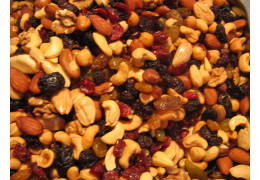
Healthy office snacking starts with the right choice. Our 30 g portion packs of nuts provide long-lasting energy, are...
Read more
Nuts & Daily Nutrition: What You Need to Know
381 views 0 Liked

Nuts are versatile, nutritious and easy to combine. Learn more about different types of nuts, roasting, portion size...
Read more
Why are our nuts so affordable?
203 views 1 Liked

Why are our nuts so affordable? Discover how simple packaging, efficient processes and premium-quality nuts result in...

Read more

From Bombay Nut to West African Cashew

2573 Views 0 Liked
 

Anyone who has been in the nut trade for some time knows just how much the cashew market has changed. Years ago, when we were already working with cashew nuts, they were still regularly referred to in the Netherlands as Bombay nuts.

That name did not come out of nowhere. For many years, India was the centre of the international cashew processing industry. Cashew nuts were shelled, sorted and processed there on a large scale before being exported to Europe and other parts of the world.

Today we simply call them cashew nuts, and global trade looks very different.

First India, then Vietnam

India held a dominant position in cashew processing for many years. From the 1920s onwards, the area around Kollam in particular developed into an important centre for shelling and processing cashews.

Much later, Vietnam grew rapidly. Around 2006 and 2007, Vietnam overtook India as the largest exporter of cashew kernels. Vietnam built up an enormous processing industry and today also imports large quantities of raw cashew nuts from Africa.

This last point is important. A cashew exported from Vietnam has not necessarily been grown in Vietnam. A significant proportion of the cashews processed there actually originates in Africa.

Cashews are increasingly grown in Africa

West Africa is now one of the most important cashew-producing regions in the world. Côte d’Ivoire in particular plays a major role, but other West African countries also produce significant quantities.

For many years, a large proportion of these nuts were shipped as raw cashew nuts in shell to India and Vietnam. They were processed there, after which the edible cashew kernel began another journey, for example to Europe.

But that too is beginning to change. More and more investment is being made in local processing in West Africa. We believe this is an important development.

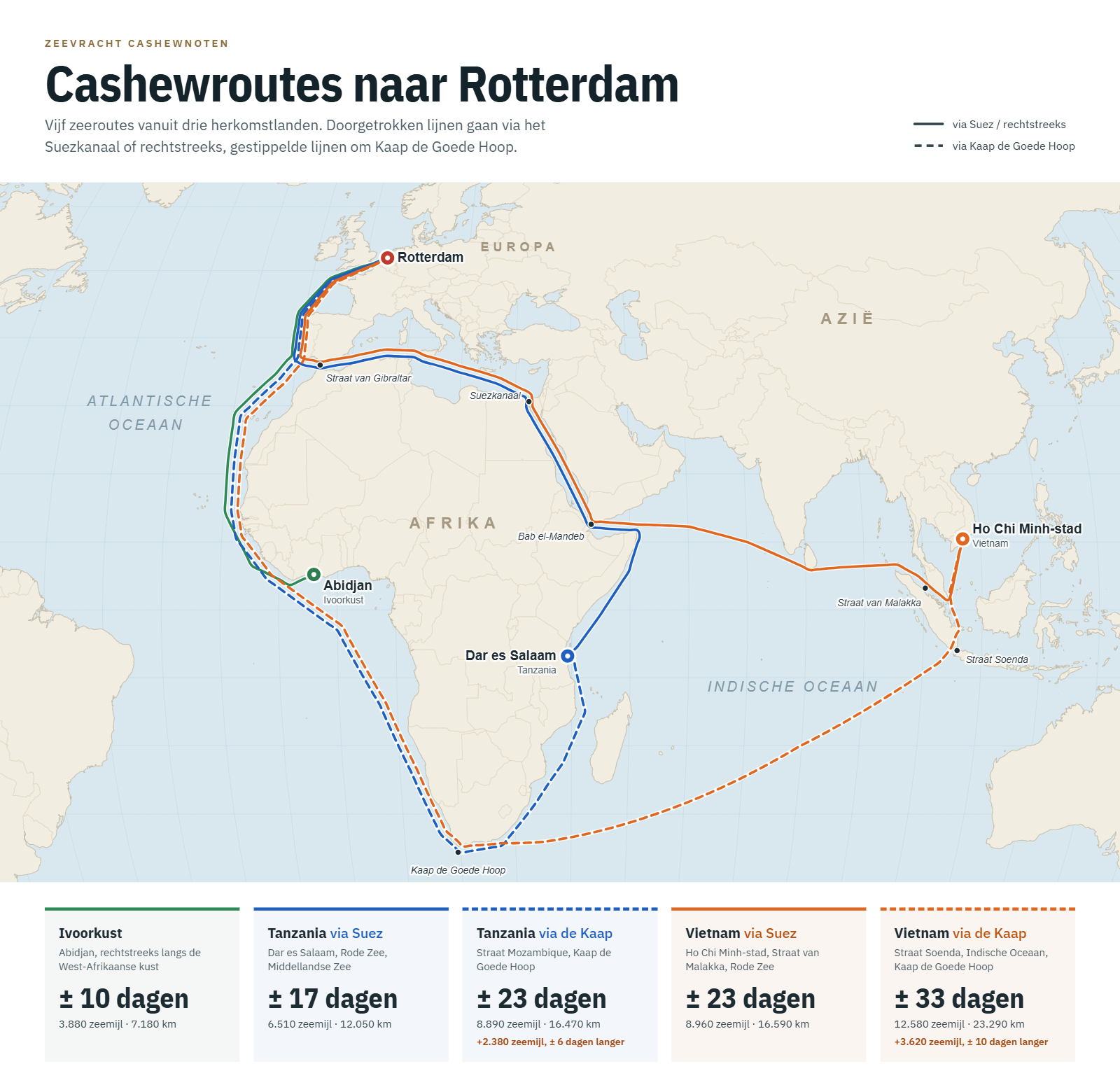
Sea routes for cashew nuts from Côte d’Ivoire, Tanzania and Vietnam to Rotterdam

Indicative sea routes and distances. Actual routes may vary depending on the shipping company, port and current sailing route.

Why the place where cashews are shelled matters so much

When people talk about CO₂ and cashew nuts, the focus is often on the number of kilometres a cashew travels. But comparing distance alone does not tell the whole story.

For 1 kilogram of saleable cashew kernels, roughly 4 to 5 kilograms of raw cashew nuts in shell are required. This means that most of the original weight is not transported to the consumer as edible cashew.

That makes a major difference.

When raw cashew nuts are first shipped from Africa to Asia to be shelled there, it is not one kilogram that is transported over that route, but several kilograms of raw nuts for every kilogram of cashew eventually sold.

When cashews are processed in the country or region of origin, the shells and other residual materials remain at the source, and only the much lighter finished product has to be transported further.

But sustainability is about more than one route

In recent years, more and more advertising has focused on cashew nuts that are both grown and shelled in Africa. In itself, we see this as a positive development.

But in our view, there is another question that should also be asked:

What happens to the rest of the global market?

The international cashew market works like communicating vessels. India and Vietnam have enormous processing capacity and need raw cashew nuts to keep that capacity running.

If Europe, for example, buys more locally processed cashews from one part of Africa, that does not automatically mean that demand from India and Vietnam disappears. Those raw cashew nuts may simply be sourced from another producing region instead.

That is why we believe a CO₂ calculation should not look only at the journey of one particular cashew. To get a realistic picture, you need to look at the total trade flow, the distance travelled and the weight being transported.

And that is exactly where West Africa becomes interesting

Our cashew nuts come from West Africa. This is not a new trend for us. We have been working with cashews from this region for many years.

For the European market, West Africa has a particularly interesting location. It lies on the Atlantic side of Africa, making the route to Northwestern Europe relatively logical and direct.

When a West African cashew is also shelled in West Africa, the supply chain becomes short and transparent: grown in West Africa, processed in West Africa and then shipped as shelled cashews to Europe.

There is then no need to first transport a much larger quantity of raw cashew nuts to Asia, only for the much lighter finished product to be shipped back towards Europe afterwards.

From Bombay to Africa

In just a few decades, the cashew market has changed completely.

From the days when people in the Netherlands spoke of Bombay nuts and India was the centre of cashew processing, to the rise of Vietnam and then to an African continent that is not only producing more and more cashews, but is also increasingly processing the nuts itself.

In our view, this last development is the most important one.

Not because one country or one route is automatically sustainable, but because it makes sense, wherever possible, to process a product close to its origin. This avoids unnecessary transport of shells and residual materials, keeps more added value in the producing country and can significantly shorten the trade route to the final market.

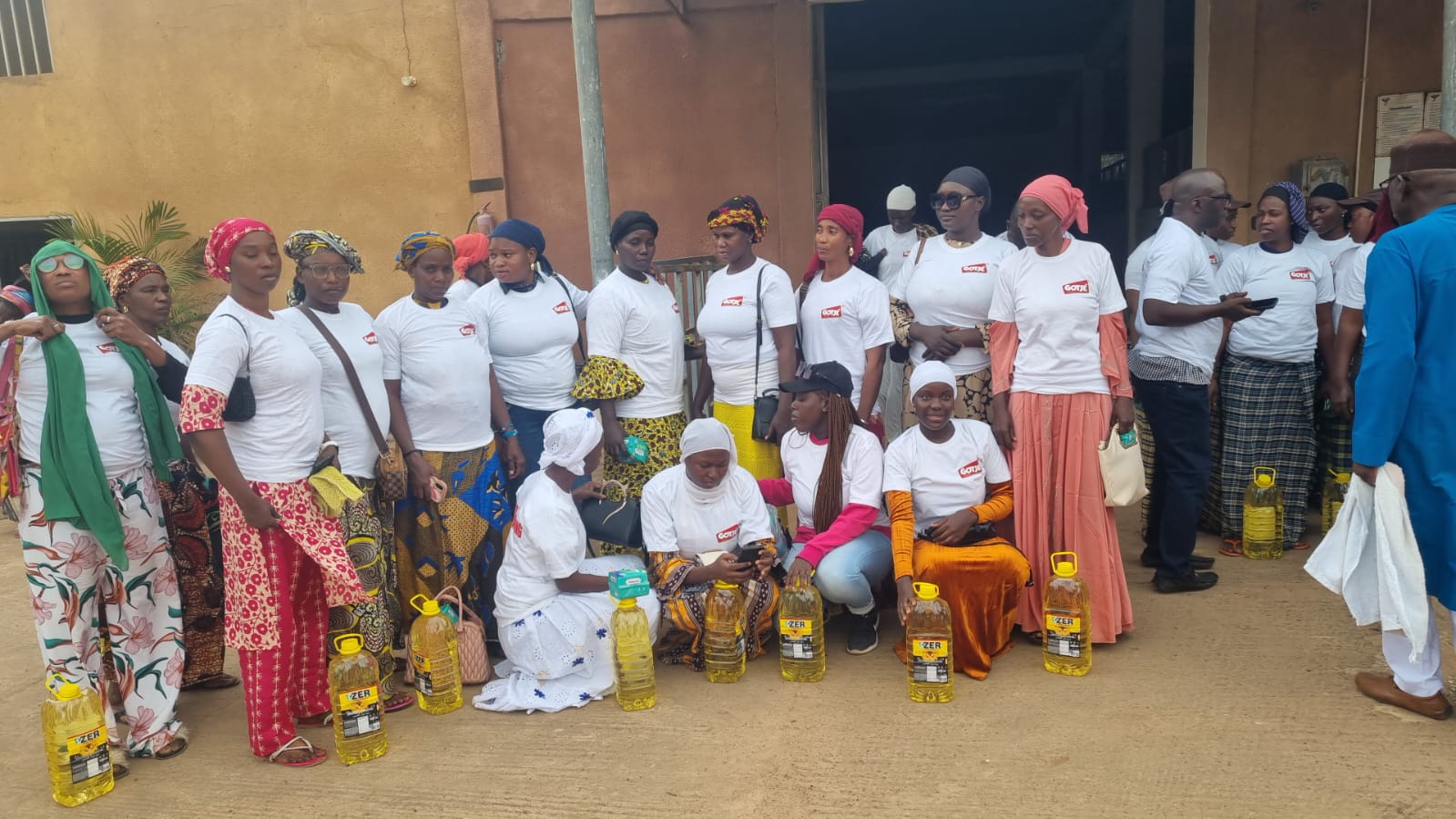
Local involvement in cashew processing in West Africa

Our view on cashews

We do not believe sustainability can be summed up in one attractive figure or one number of kilometres saved.

The global cashew supply chain is interconnected. That is why we prefer to look at the full picture:

  • Where is the cashew grown?
  • Where is it shelled?
  • How many kilograms of product are transported over what distance?
  • And what happens to the other cashew flows when the market shifts?

For us, the conclusion is clear: cashew nuts from West Africa, processed as much as possible within the region itself, form a particularly logical supply chain for the European market.

From Bombay nut to West African cashew. Global trade has changed — and perhaps it is time that, when we talk about sustainability, we stop looking at just one cashew and start looking at the entire chain.

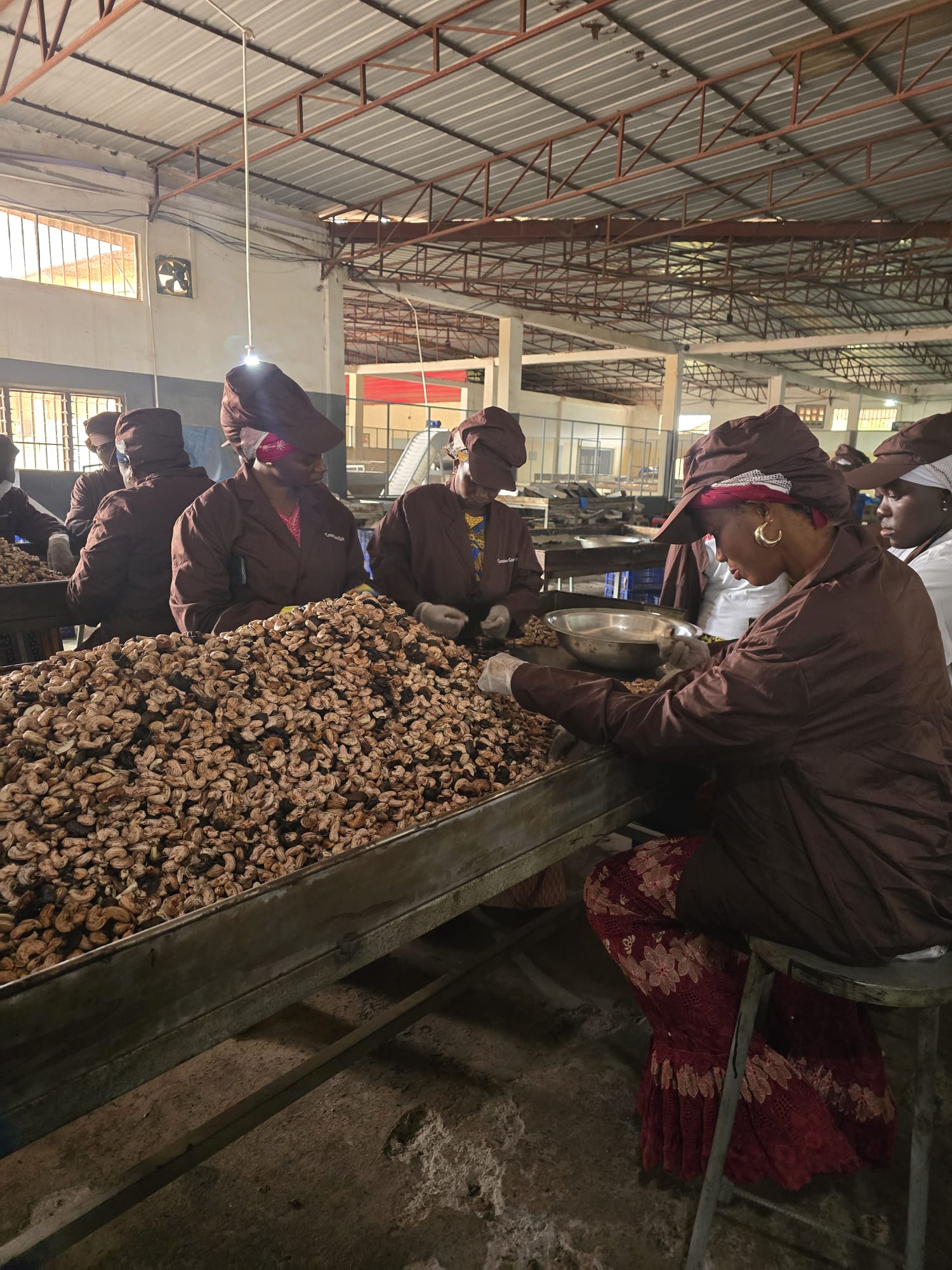
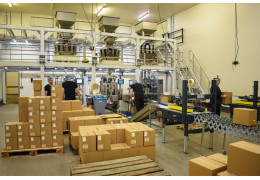
Sorting cashew nuts in West Africa

 
Was this blog post helpful to you?
Posted in: Producten
Leave a comment
★
★
★
★
★
Security code